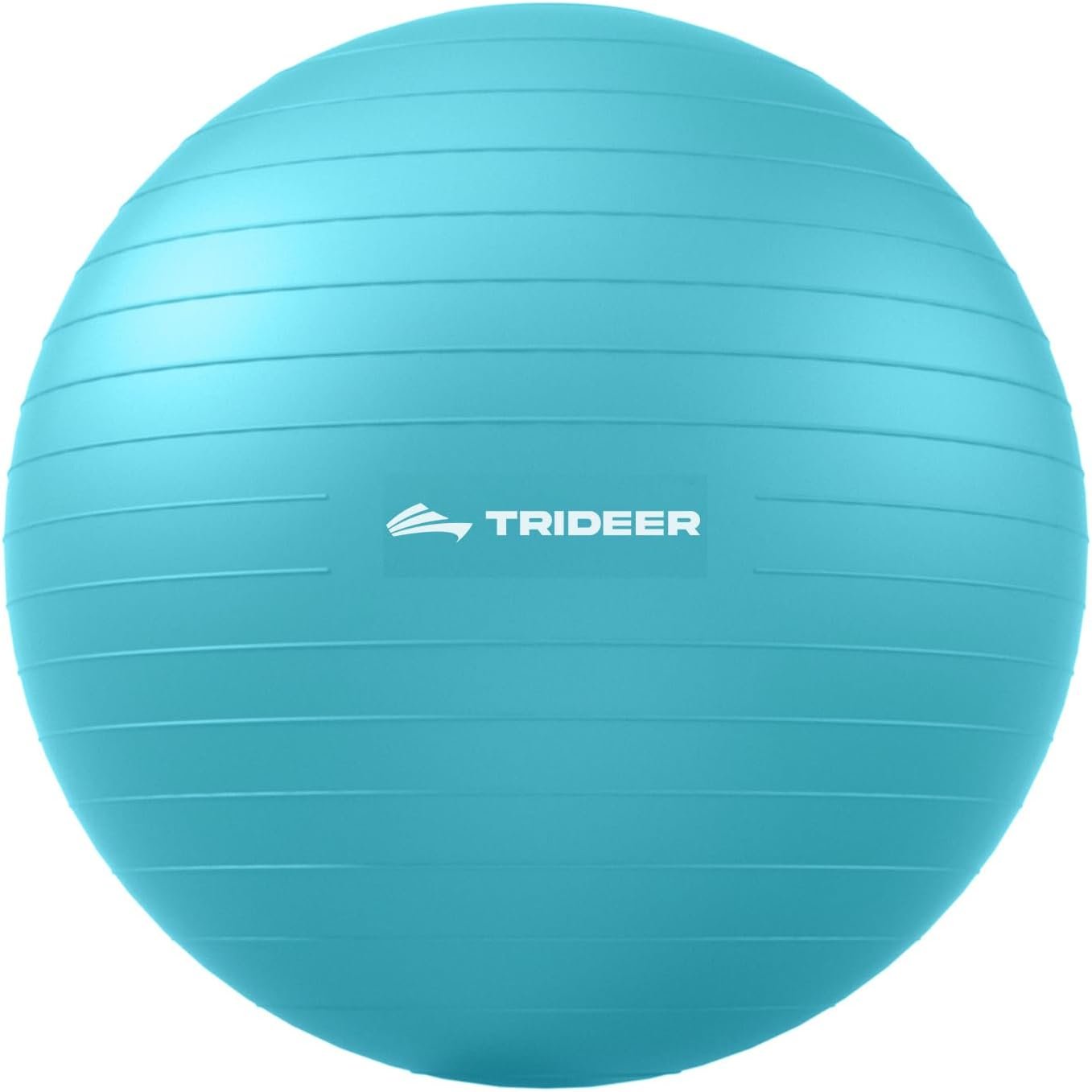
I bought a stability ball twice. The first one sat in the corner inflated for six months until it slowly deflated and became a dog bed. The second one I actually use because I understood what it was actually for.
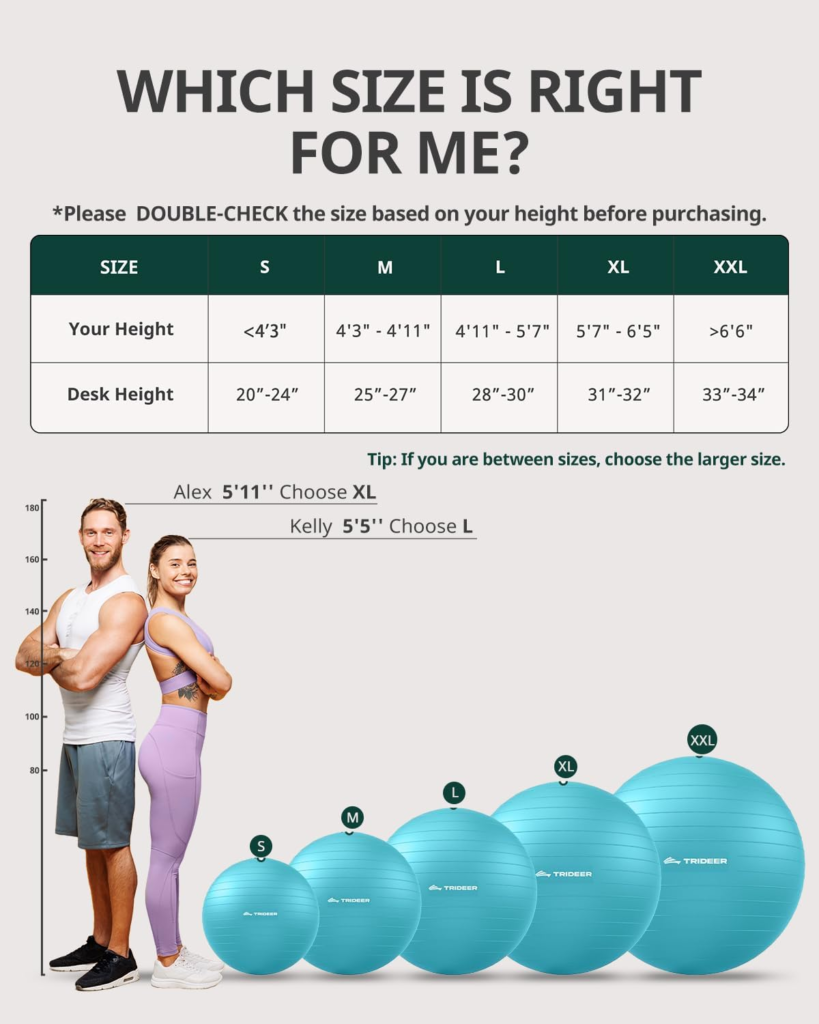
A stability ball isn’t a replacement for your workout — it’s a modifier that makes simple movements significantly harder by introducing instability. A plank on the floor is hard. A plank with hands on a stability ball is brutally harder. Same time, triple the core engagement.
Have the equipment but not sure what to do with it? Most home gym owners have the gear but no structured plan — which means training stays inconsistent and results plateau. This article covers one aspect of home training. For a complete 16-week progressive plan that works with the equipment you already own — read the complete home workout plan.
The Anti-Burst Stability Ball Built for Real Workouts
This is one of Amazon’s top-rated stability balls in the $20–$45 range — featuring anti-burst PVC construction rated to 2,000 lbs static load, textured surface grip, and sizing guidance for proper height-to-diameter matching.
What distinguishes a quality stability ball from a cheap one:
- Anti-burst PVC: deflates slowly if punctured rather than exploding suddenly — critical safety feature
- Correct diameter for your height: wrong size means poor body mechanics and reduced effectiveness
- Thick-gauge construction: holds shape under load without deforming during exercises
- Textured surface: prevents slipping during planks, push-ups, and seated movements
- Includes pump for inflation and easy size adjustment over time
👉 Click the stability ball you’re reading about to check current pricing and size options on Amazon
Choosing the Right Stability Ball Size
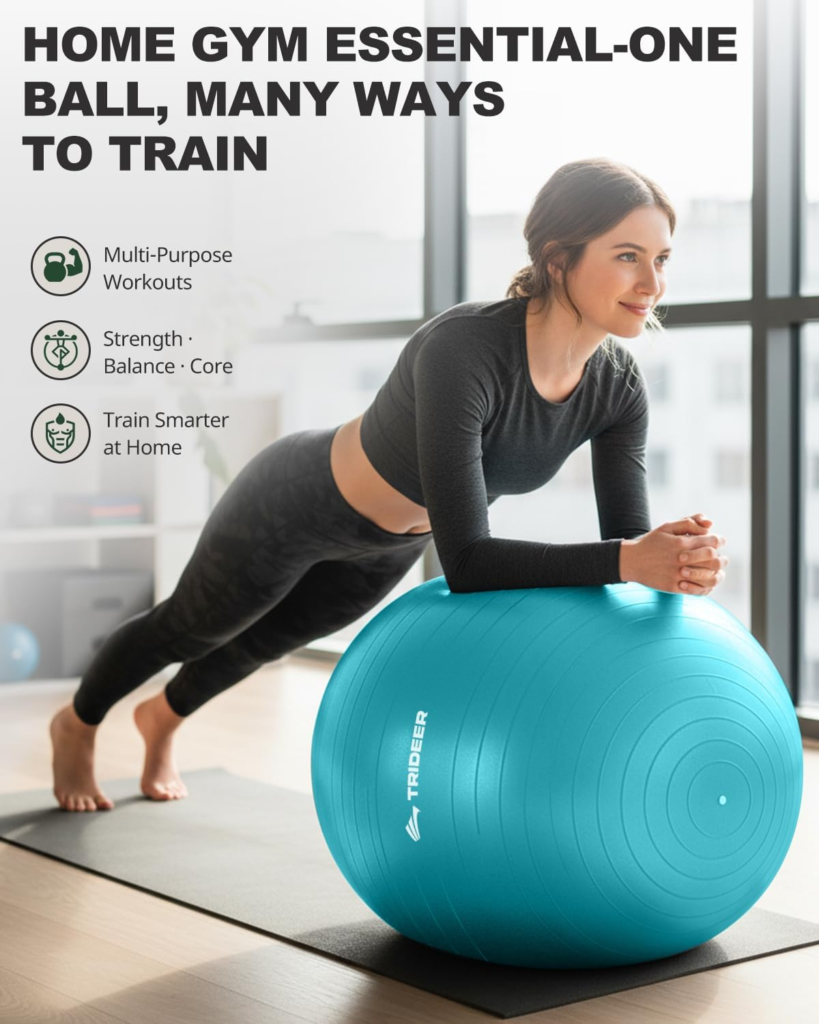
Stability ball diameter directly affects biomechanics — wrong size reduces exercise effectiveness and increases injury risk:
- Under 5’0″: 45 cm ball — seated, hips and knees at 90 degrees
- 5’0″ to 5’5″: 55 cm ball — the most common size
- 5’6″ to 6’0″: 65 cm ball — standard adult size for most exercises
- Over 6’0″: 75 cm ball — tall users need the larger diameter for correct spinal positioning
- Test: seated on the ball, your thighs should be parallel to or slightly higher than the floor
A stability ball is one piece of a complete core and mobility training setup. The science-backed guide to training for fat loss at home programs stability ball work alongside resistance bands and bodyweight movements for a balanced weekly training structure.
Before vs. After Adding a Stability Ball to Training
Before:
- Core training limited to floor planks, crunches, and sit-ups — effective but predictable
- Lower back tightness from sedentary desk work with no active counterbalance
- Push-ups and planks feeling easy enough to stop being a significant challenge
After:
- Stability ball planks force constant micro-adjustment — 60 seconds feels like 2 minutes
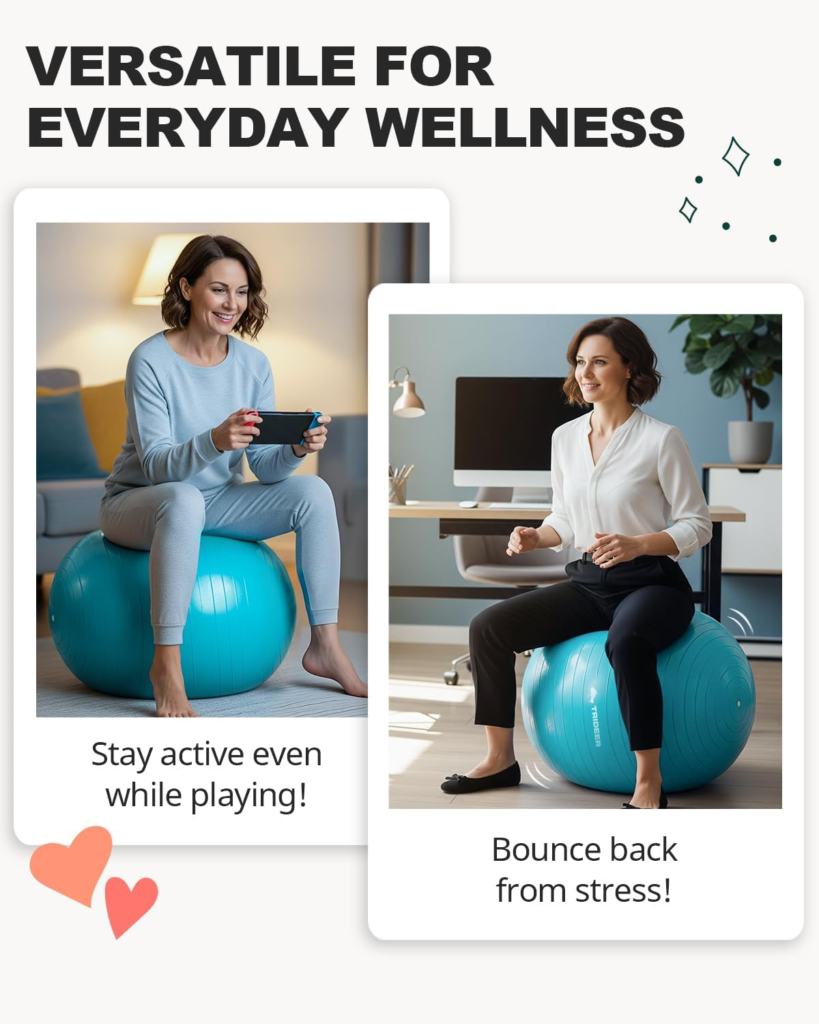
- Using ball as a desk chair for 30-minute intervals actively engages postural muscles
- Lower back mobility improved noticeably within 3 weeks of daily ball exercises
- Push-up variations on the ball added new challenge without adding weight
5 Core Exercises to Start With on a Stability Ball
- Ball plank: Forearms on ball, body in plank position. Hold 30 seconds. The ball’s instability forces constant core engagement not present in floor planks.
- Ball pass: Lie on back, hold ball between hands overhead. Lift legs and transfer ball from hands to feet — lower both to floor simultaneously. Repeat 10 times.
- Wall squat with ball: Ball between lower back and wall, walk feet out 2 feet. Squat until thighs parallel, using ball to maintain upright torso. 3 sets of 12.
- Ball pike: Start in plank with shins on ball. Pull knees toward chest, rolling ball under you — hips rise into pike position. 3 sets of 8.
- Seated balance: Simply sit on the ball at your desk for 20–30 minute intervals. Maintaining balance activates deep stabilizing core muscles without any formal exercise.
For a complete beginner home gym setup where the stability ball is just one component, the best home gym equipment for beginners guide covers how to build a full-function workout space with minimal equipment and budget.
Q&A: Stability Ball Questions People Search For
Q: Can a stability ball replace a desk chair?
For short intervals, yes — 20–30 minutes at a time on a properly sized ball engages postural muscles and can reduce lower back tension from prolonged sitting. Full-day use isn’t recommended as it can cause its own fatigue without back support.
Q: How much weight can a stability ball hold?
Quality anti-burst balls are typically rated 600–2,200 lbs in static load. For dynamic exercises (jumping, sudden weight shifts), the safe threshold is lower. Anti-burst construction is the more important spec — it determines failure mode, not just maximum load.
Q: How often should I replace a stability ball?
With proper care (stored away from heat and sharp objects, correct inflation), quality balls last 3–5 years of regular use. Inspect periodically for micro-cracks or surface degradation, especially at the seam.
Q: Is it safe to do push-ups on a stability ball?
Yes — hands on the ball for incline push-ups, or feet on the ball for decline push-ups, are both safe with correct form. Start with the easier variation and build stability before adding the harder position.
Final Take
A stability ball is one of the cheapest ways to significantly increase the difficulty of bodyweight exercises you already do. A plank on the floor is a plank. A plank on a stability ball is a different, harder exercise. Same time invested, more result.
Twenty dollars of instability. Noticeably better core strength in four weeks.
Unstable surface. Stable progress. Stronger core guaranteed.
Affiliate disclosure: This article may contain affiliate links. If you purchase through them, HomeGymStarter.com may earn a small commission at no additional cost to you.