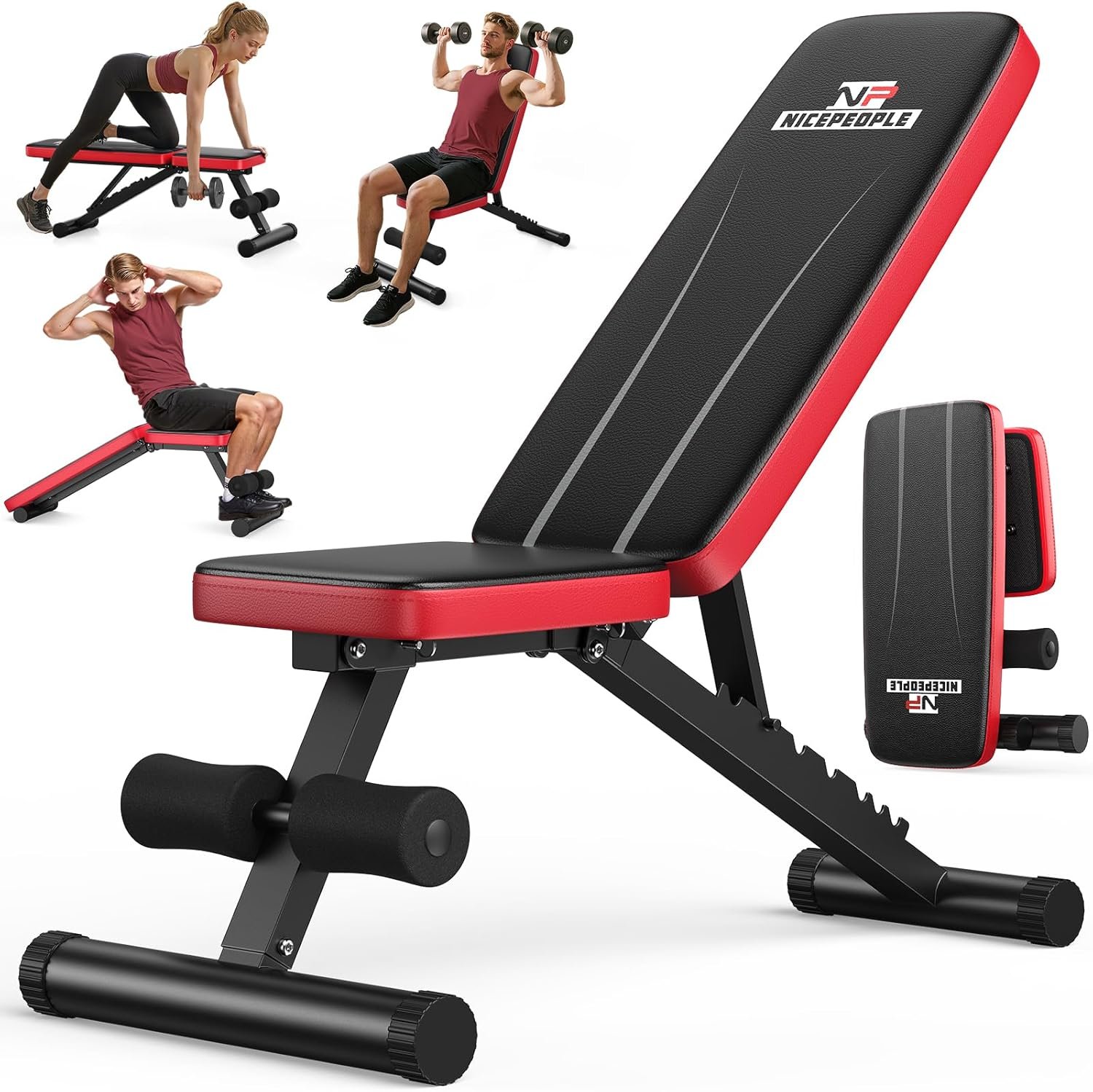
I put off buying a bench for my home gym for a year because the good ones were too expensive and the cheap ones looked like they’d collapse under a loaded barbell. Then I found a budget steel bench rated to 660 lbs that folds flat for storage, and it changed what I could do at home overnight.
A flat bench unlocks dumbbell bench press, skull crushers, rows, step-ups, and a dozen other exercises that floor work can’t replicate. The one I bought was $80, supports more weight than I’ll ever lift, and slides under my bed when I’m not using it. The cost-per-use calculation made every other purchase in my gym look expensive.
The Foldable Steel Bench Built for Serious Home Training
This is one of Amazon’s top-rated budget flat benches in the $60–$120 range — featuring a heavy-gauge steel frame rated to 660+ lbs, high-density foam padding, a foldable design for compact storage, and rubber-capped feet that protect floors and prevent sliding.
What separates a trustworthy budget bench from a dangerous one:
– Heavy-gauge steel frame — thin tubing flexes under load and creates instability during pressing movements
– 660+ lb weight rating — your body weight plus dumbbells or a barbell adds up faster than you’d expect
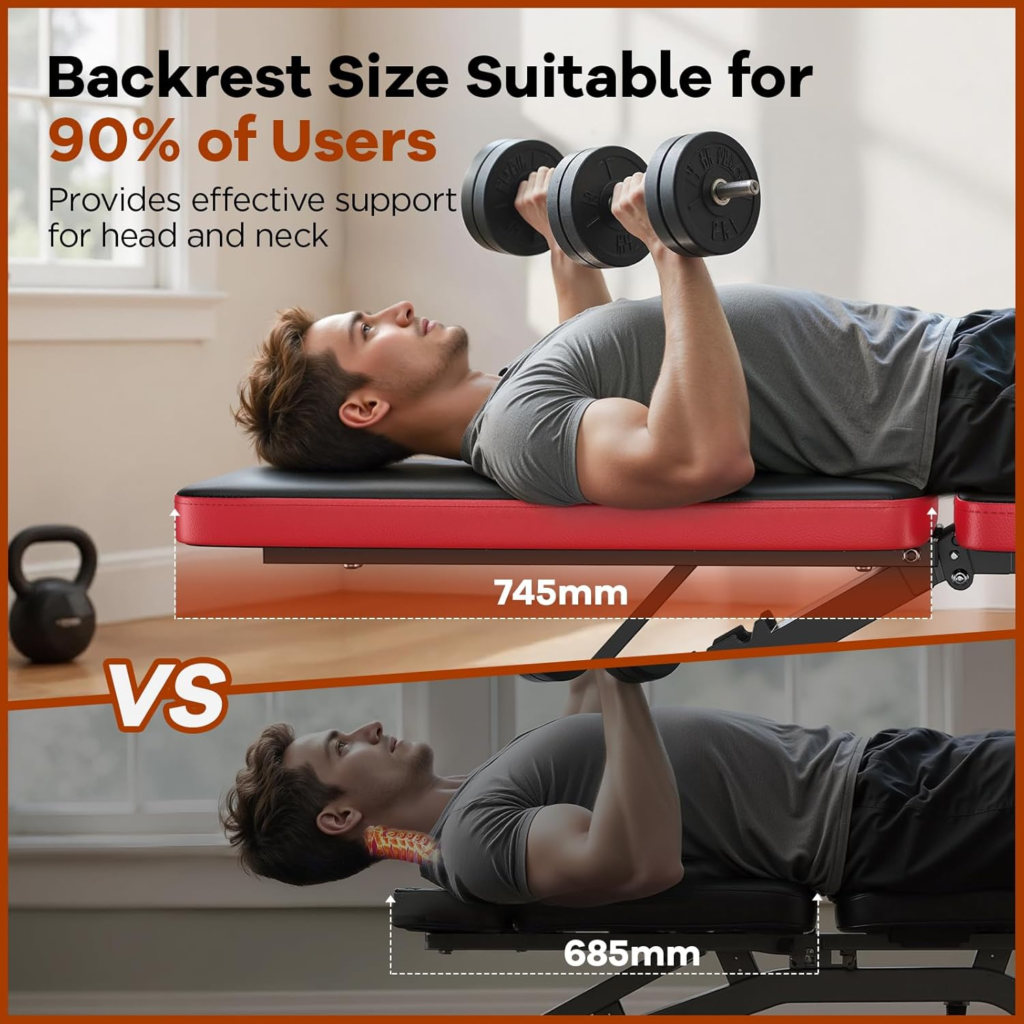
– High-density foam padding — cheap benches use thin foam that compresses to nothing, putting your spine against steel
– Stable base with wide feet — a narrow base wobbles laterally during single-arm dumbbell work
– Foldable with secure locking mechanism — the bench must lock firmly in both open and folded positions
Flat Bench vs. Adjustable Bench: Which to Buy First
This is the first decision most home gym builders face:
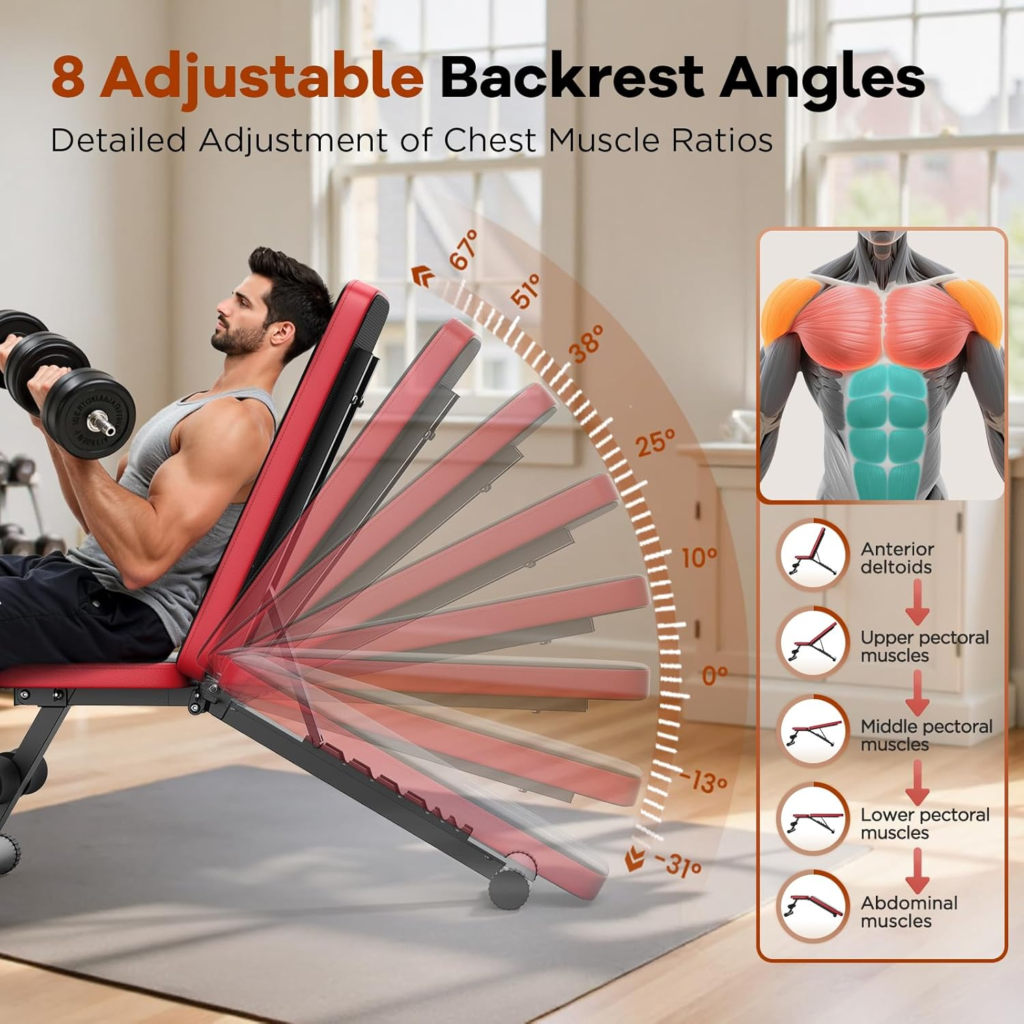
– Flat bench: cheaper, more stable, lower profile, better for heavy pressing — the foundation piece
– Adjustable bench: incline and decline positions add exercise variety — but costs 2–3x more and is less stable at heavy loads
– For beginners building a first home gym, the flat bench covers 80% of bench-requiring exercises at half the price
– Upgrade to adjustable once you’ve outgrown flat bench variations and want incline pressing
A flat bench is one piece of a complete home gym setup. The beginner home gym equipment guide covers how to build a full training space around a bench, dumbbells, a pull-up bar, and resistance bands for under $300.
Before vs. After Adding a Flat Bench
Before:
– Chest exercises limited to push-ups and floor press — both have restricted range of motion
– Dumbbell rows done bent over with no support — lower back fatigued before the target muscles
– No elevated surface for step-ups, hip thrusts, or seated shoulder work
– Skipped exercises that required a bench, limiting overall program effectiveness
After:
– Dumbbell bench press with full range of motion — the exercise that floor press couldn’t replace
– Supported single-arm rows with chest on bench — lower back removed as the limiting factor
– Step-ups, Bulgarian split squats, and hip thrusts all added to leg day
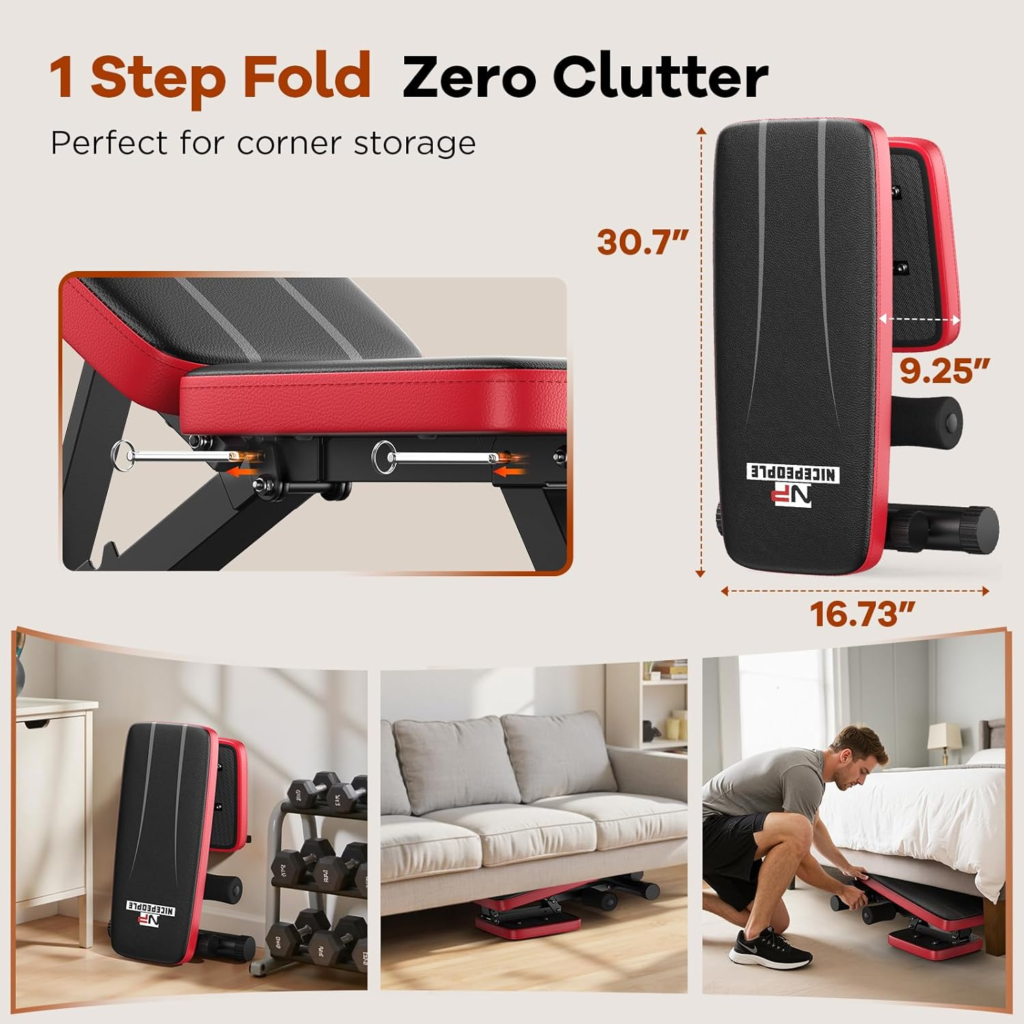
– Bench folds flat and stores under the bed — zero permanent floor space required
5 Tips for Choosing and Using a Budget Flat Bench
– Test the bench at the store or check video reviews of people pressing heavy on it — a listed weight rating means nothing if the frame visibly flexes under load.
– Check the pad width — 10–12 inches supports your shoulder blades without your arms hitting the sides during pressing. Narrower pads create instability.
– Place rubber mats under the bench feet — prevents sliding on hard floors during pressing and protects the surface.
– Tighten all bolts monthly — vibration from use loosens connections over time, and a loose bench is a dangerous bench.
– Don’t use a folding bench for barbell bench press without a spotter or safety arms — the folding mechanism adds a failure point that fixed-frame commercial benches don’t have.
For adding pressing volume to your bench work, the dip station guide covers how dips complement bench press for complete chest and tricep development at home.
Q&A: Budget Bench Questions People Search For
Q: Is a $60–$80 bench safe for heavy lifting?
If the frame is heavy-gauge steel and the rating is 660+ lbs from a reputable manufacturer, yes. The risk comes from benches with thin tubing, plastic components, or unrated weight capacities. Check reviews specifically for stability under load.
Q: Does a foldable bench wobble?
Slightly more than a fixed-frame bench, but quality foldable benches with proper locking mechanisms are stable enough for dumbbell work up to 100+ lb dumbbells. For very heavy barbell benching, a fixed-frame bench is more confidence-inspiring.
Q: How thick should the padding be?
2–3 inches of high-density foam is the sweet spot. Thinner padding bottoms out under your shoulder blades. Thicker padding is too soft and creates instability during pressing. High-density matters more than thickness.
Q: Can I use a flat bench for decline exercises?
Not safely — a flat bench doesn’t have leg hooks to anchor your body at a decline angle. You can simulate slight decline by placing small plates under the head-end legs, but true decline work requires a dedicated or adjustable bench.
Final Take
A budget flat bench is the most exercise-per-dollar purchase in a home gym. It unlocks pressing, rowing, step-ups, and hip thrusts that floor-only training can’t match — and a quality foldable model stores completely out of sight when you’re done.
660-lb rating. Folds flat. Slides under the bed.
Steel frame. Real workouts. Budget price.
Affiliate disclosure: This article may contain affiliate links. If you purchase through them, HomeGymStarter.com may earn a small commission at no additional cost to you.