Best Rowing Machine for Home Use 2026: The Magnetic Resistance Rower That Simulated Water Rowing Smoothly
Rowing machines have a reputation for being intimidating — all those people on the machines at the gym, moving with purpose, looking like they know something you don’t.
What they know is that rowing is the most complete single-machine workout available. Upper body, lower body, core, and cardiovascular — all simultaneously. Once I learned the stroke, I replaced three separate pieces of equipment with one.
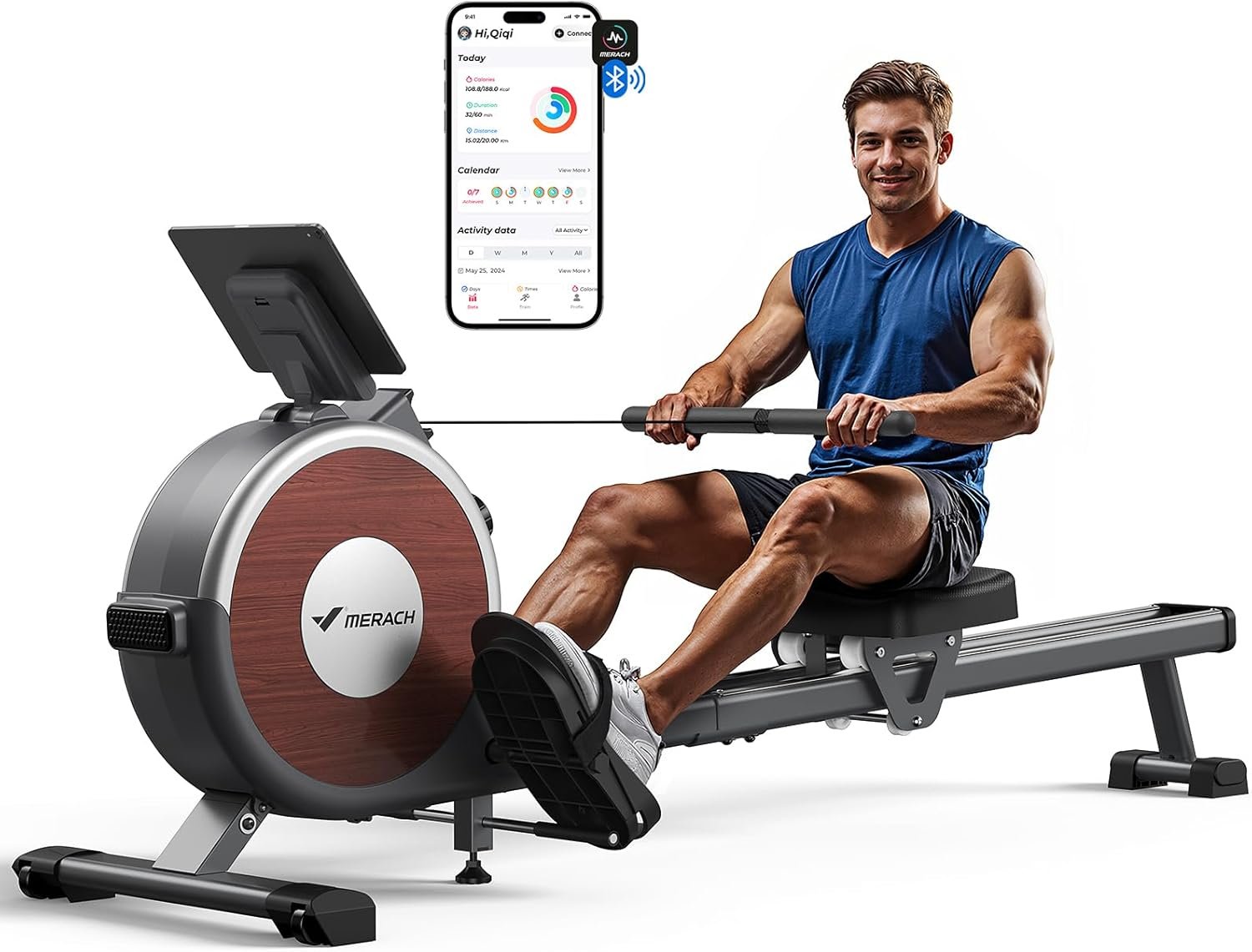
The Magnetic Rowing Machine That Delivers a Full-Body Workout
This is one of Amazon’s top-rated magnetic resistance rowing machines in the $300–$550 range — designed for smooth, quiet home use with adjustable resistance levels and accurate performance tracking.
Why magnetic resistance specifically:
- Near-silent operation — no chain noise, no flywheel roar
- Consistent resistance throughout the stroke — no dead spots
- 8+ resistance levels from beginner to competitive
- No maintenance required — no chain oil, no flywheel cleaning
- Folds vertically for compact storage against a wall
Why Rowing Burns More Calories Than Most Cardio
The rowing stroke engages approximately 86% of muscle groups in a single movement — more than any other cardio machine:
- Drive phase: legs push, glutes fire, back extends — similar to a deadlift
- Finish phase: arms pull, core braces, lats engage — similar to a row
- Recovery phase: controlled return that keeps muscles under tension
- Result: caloric burn 20–30% higher than cycling at equivalent perceived effort
For a complete programming approach that puts the rower to work systematically, the beginner guide to training for fat loss at home includes rowing-specific interval and steady-state protocols.
The Rowing Stroke: Getting It Right From Day One
Most people row with their arms instead of their legs. Correct technique makes a dramatic difference in both effectiveness and injury prevention:
- Catch: arms straight, lean slightly forward from hips, shins vertical.
- Drive: push with legs FIRST — don’t pull with arms until legs are nearly straight.
- Finish: lean back slightly, pull handle to lower ribs, elbows past body.
- Recovery: arms extend first, then hinge forward from hips, then slide knees up.
- Ratio: spend twice as long on the recovery as the drive — smooth return, powerful stroke.
Before vs. After Adding a Rowing Machine
Before:
- Separate cardio (bike) and strength sessions — two workouts per day required
- Upper body not trained during cardio at all
- 45-minute cardio sessions feeling incomplete
- Three pieces of equipment taking up garage space
After:
- 20-minute rowing session replaces both cardio and upper body work
- Full-body fatigue — the productive kind — in half the time
- One machine in the same footprint as a single piece of equipment
- Noticeably better posture within 6 weeks from back and core engagement
Rowing Workouts for Beginners
- Steady-state: 20 minutes at a comfortable pace (22–24 strokes per minute), focusing on technique.
- Interval: 250m hard / 250m easy x 6–8 rounds — builds cardiovascular capacity quickly.
- Pyramid: row 1 min / rest 1 min, row 2 min / rest 1 min, row 3 min / rest 1 min, then back down.
For equipment that complements rowing in a complete home gym, the best home gym equipment for beginners guide shows how a rower fits alongside weights and flexibility tools.
Q&A: Home Rowing Machine Questions People Ask
Q: How much space does it need?
A standard rower needs roughly 8×2 feet of floor space. Most fold vertically to about 2×2 feet for storage.
Q: Is rowing hard on the lower back?
With correct technique, rowing actually strengthens the lower back. Poor technique — specifically rounding the back at the catch — is where back issues come from.
Q: Magnetic vs. air resistance — which is better?
Magnetic is better for home use — quiet, low maintenance, and consistent. Air rowers are preferred by competitive rowers for feel but are loud and require more upkeep.
Q: Is $300–550 a reasonable price for a home rower?
Yes — this range buys genuine build quality and accurate tracking. Below $200, frame rigidity and resistance consistency drop noticeably.
Final Take
A magnetic rowing machine is one of the best investments a home gym can make. Nothing else delivers the same combination of cardiovascular and muscular work in a single, compact, quiet machine.
Learn the stroke properly, and this becomes the machine you use every single session.
86% of muscles. One stroke. Total fitness.