I added box jumps to my training after reading about their impact on explosive power, then immediately skinned both shins on the metal edge of a commercial gym plyo box. The movement was fine — the equipment was unforgiving.
A foam plyo box solved this entirely. The soft edge means a missed jump is a bruised ego, not a bloody leg. I stopped fearing the miss, started attempting higher boxes, and my vertical improved by 4 inches in six weeks of consistent training.
The Stackable Plyo Box That Makes Jump Training Safe for Home Gyms
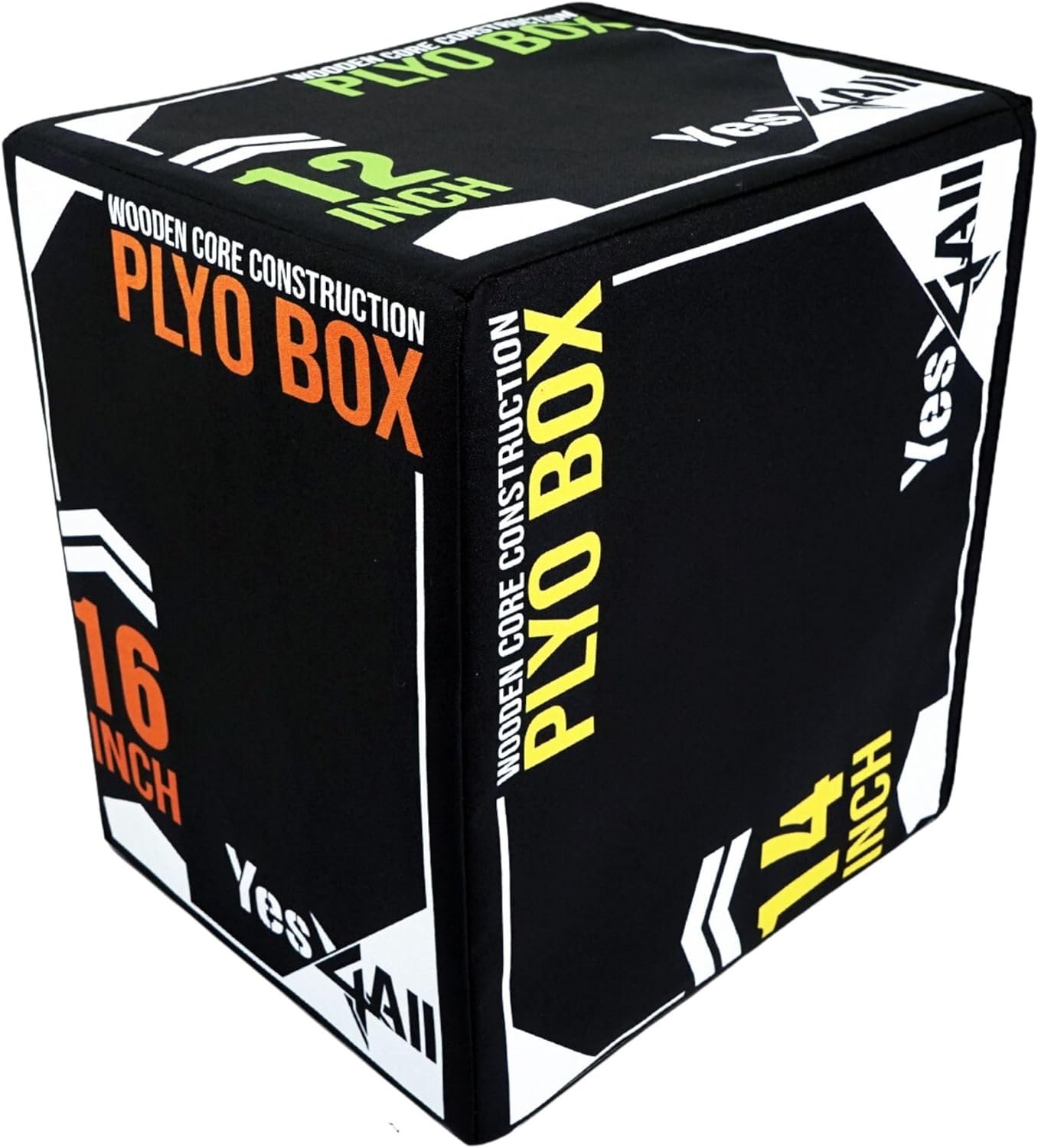
This is one of Amazon’s top-rated plyo boxes in the $80–$160 range — featuring high-density foam construction, a vinyl cover for durability, three usable heights from a single unit (typically 20″, 24″, and 30″ depending on orientation), and stackable design for progressive height increases.
What separates a quality plyo box from a cheap one:
- High-density foam: firm enough to support explosive landings without compressing, soft enough that missed jumps don’t injure
- Three-in-one height options: rotating the box gives three different jump heights from a single purchase
- Anti-slip vinyl surface: landing surface stays in place under repeated impact
- Weight capacity 400+ lbs: handles explosive landing forces from athletes of all sizes
- Stackable: two boxes stack for 40″+ heights for advanced training
👉 Click the plyo box you’re reading about to check current pricing and height options on Amazon
Foam vs. Wood Plyo Boxes: Why Foam Wins for Home Training
Commercial gyms often use wood boxes for cost reasons. Home trainers should choose foam:
- Safety: missed jumps on foam mean a bruise at worst; missed jumps on wood or steel mean lacerations and serious bruising
- Fear removal: athletes subconsciously hold back when they fear the miss — foam removes the penalty and enables better training intensity
- Floor protection: foam boxes have rubber feet that don’t scratch or damage home gym floors
- Versatility: foam boxes can be used for step-ups, seated box jumps, depth drops, and Bulgarian split squats safely
Plyo box training produces the best results when combined with a structured power and conditioning program. The science-backed guide to training for fat loss at home programs box jumps alongside resistance work for maximum metabolic effect.
Before vs. After Adding a Plyo Box to Training
Before:
- Jump training limited to tuck jumps and broad jumps — no measurable height target
- Avoiding box jumps at the gym due to fear of missing on hard metal edges
- Explosive power development stalled without a structured progressive target
After:
- Started at 20″ box, progressed to 30″ within 8 weeks of consistent training
- Vertical leap improved 4 inches, measured on a standing reach test
- Box is also used for step-ups, depth drops, and seated Bulgarian split squats — versatile daily use
- Zero injuries from missed jumps — foam edge means misses are harmless
Plyo Box Jump Progressions for Beginners to Advanced
- Step-up: Start with step-ups to build confidence and single-leg strength before jumping. 3 sets of 10 each leg on lowest height.
- Seated box jump: Sit on a bench at box height, stand and immediately jump onto the box. Removes the stretch-shortening cycle and trains raw power. 3 sets of 5.
- Standard box jump: Stand 12 inches from box, swing arms, jump and land softly with bent knees centered on the box. Step down (don’t jump down to preserve knees). 4 sets of 5.
- Depth drop: Stand on box edge, step off (don’t jump), land softly absorbing force. Trains deceleration and landing mechanics. 3 sets of 5 each leg.
- Depth jump: Depth drop immediately followed by a max-effort jump. Advanced plyometrics — add only after 8+ weeks of standard box jumps.
A plyo box pairs well with battle ropes and kettlebells for a complete power and conditioning home gym. The best home gym equipment for beginners guide covers how to sequence equipment purchases to build maximum training variety at minimum cost.
Q&A: Plyo Box Questions Athletes Ask
Q: What height plyo box should a beginner start with?
20 inches for most adults. If you can step up onto a standard bench comfortably, you can box jump at 20″. Beginners should start with step-ups regardless of height before progressing to actual jumps.
Q: Can I use a plyo box for exercises other than jumps?
Yes — a foam plyo box is one of the most versatile pieces of home gym equipment. Step-ups, Bulgarian split squats, incline push-ups, dips, seated jumps, and depth drops all use the box as a platform.
Q: What is the weight limit on foam plyo boxes?
Quality foam boxes handle 400–600 lbs static load. Dynamic landing forces during box jumps are significantly higher than body weight — a 200-lb athlete generates 600–800 lbs of force on landing, so box quality and weight rating matters.
Q: How high should I be able to box jump?
For reference: recreational athletes typically jump 20–24″. Competitive athletes reach 30–36″. Elite athletes can exceed 40″. Progress matters more than absolute height — a consistent 2-inch improvement every 4 weeks is excellent progress.
Final Take
A foam plyo box removes the two main barriers to plyometric training: injury fear and lack of progressive targets. With three heights in one unit and zero consequence for missed attempts, it makes explosive power development genuinely accessible in a home gym setting.
Step on. Jump up. Land soft. Repeat.
Higher every week. Legs that explode. Vertical sorted.
Affiliate disclosure: This article may contain affiliate links. If you purchase through them, HomeGymStarter.com may earn a small commission at no additional cost to you.