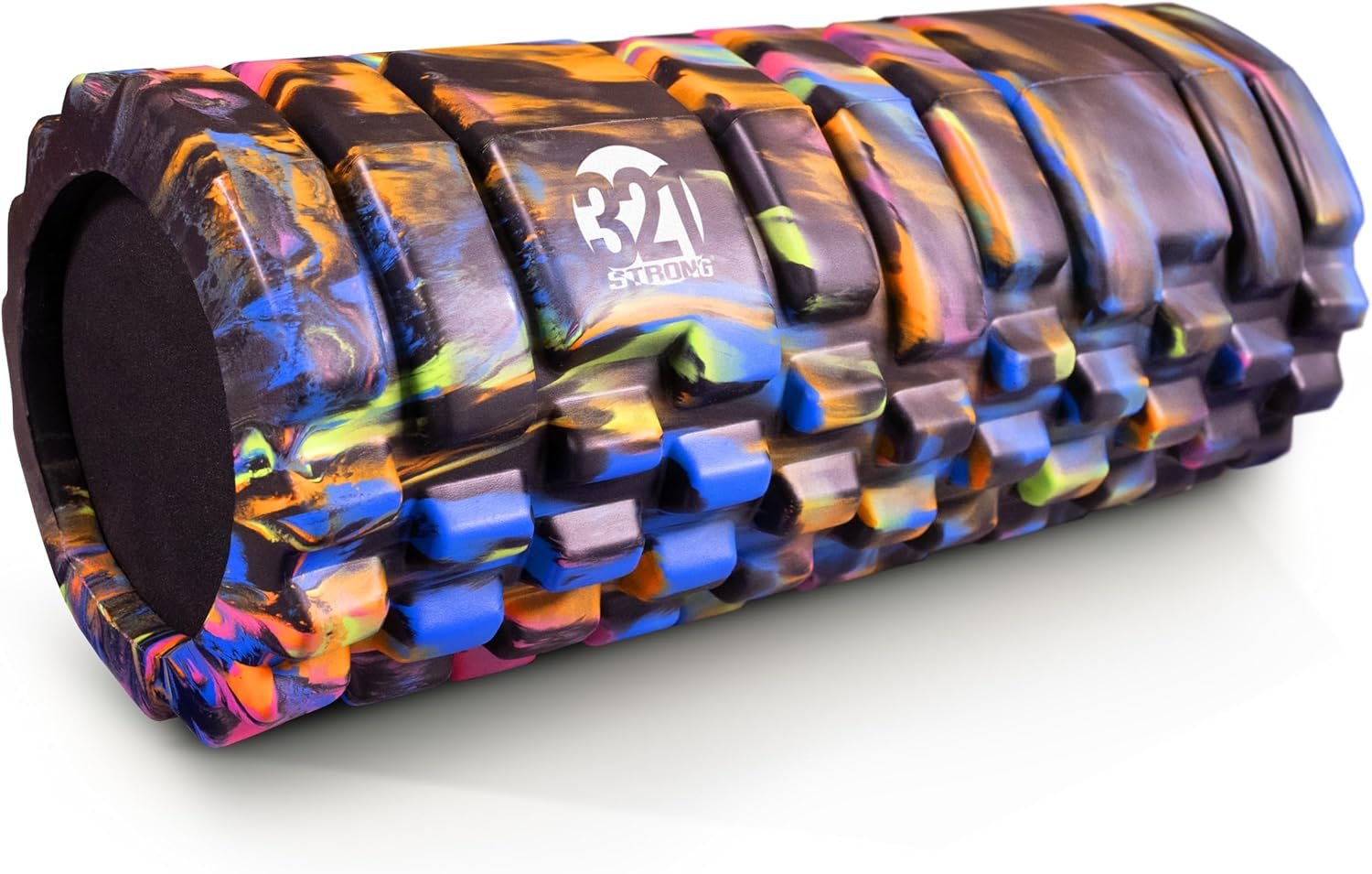
I used to skip post-workout stretching and rolling because it seemed optional. Then I started having chronic tightness in my IT band that would flare into knee pain after any run over 5 miles. Physical therapist’s first recommendation: a foam roller, used daily, 10 minutes.
Three weeks of consistent rolling eliminated the pain entirely. The IT band tightness didn’t go away — but rolling broke up the adhesions enough to prevent the pain cascade. I’ve used a foam roller daily for two years since and the knee issue has not returned.
The Textured Foam Roller That Targets Knots and Speeds Recovery
This is one of Amazon’s top-rated foam rollers in the $25–$55 range — featuring a hollow core for firmness that doesn’t compress over time, multi-directional surface texture for trigger point work, and 12–18 inch length suitable for back, legs, and shoulders.
What separates a quality foam roller from a cheap flat-foam version:
- Hollow core construction: doesn’t compress or flatten with use — cheap solid foam loses firmness within weeks
- Surface texture (grid or bumps): multi-directional pattern mimics massage finger pressure for deeper tissue work than flat surfaces
- Firmness appropriate to use: medium density for general use; high density for experienced users or larger muscle groups
- Length of 13–18 inches: full-length rollers work for back rolling; shorter versions for targeted leg and arm work
- Weight capacity 500+ lbs: handles full body weight rolling without deforming
👉 Click the foam roller you’re reading about to check current pricing and density options on Amazon
The Science Behind Foam Rolling and Why It Works
Foam rolling falls under self-myofascial release (SMR) — applying pressure to fascia and muscle tissue to reduce stiffness and improve mobility:
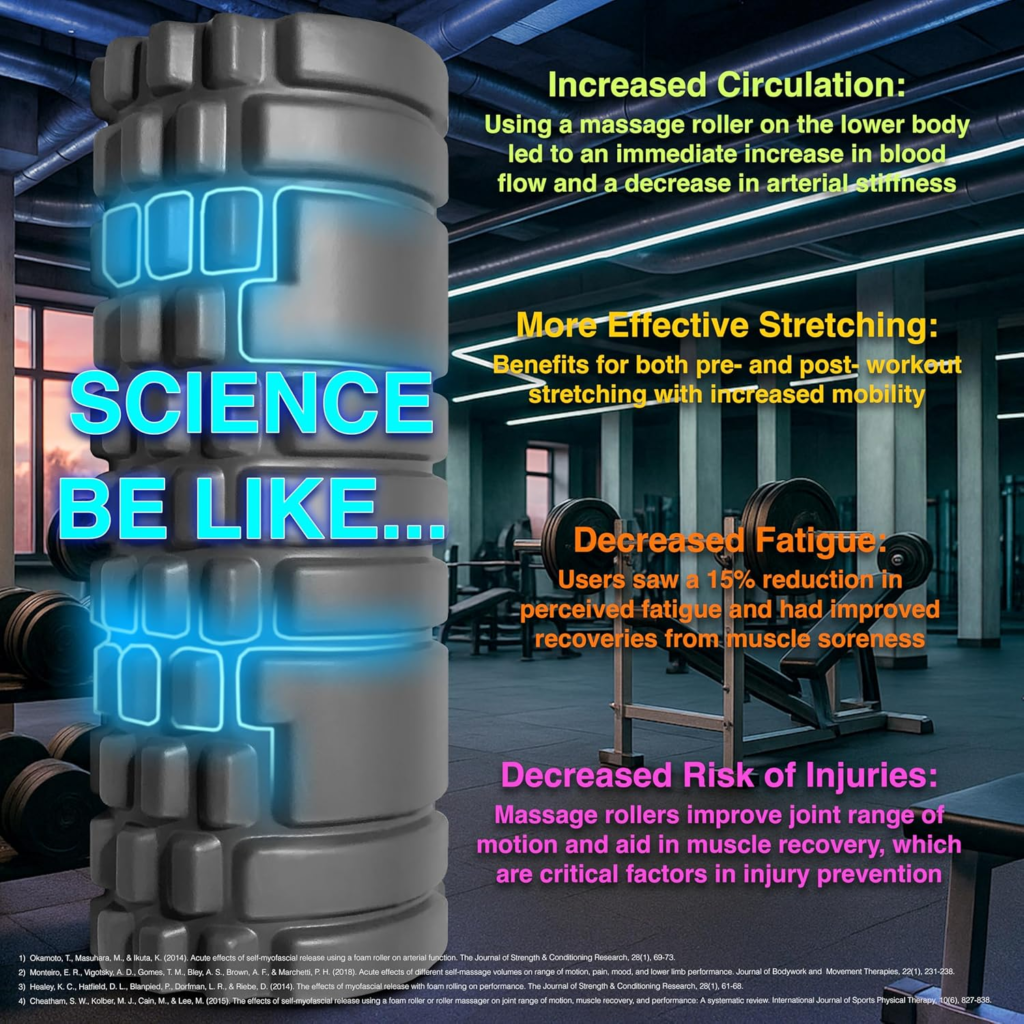
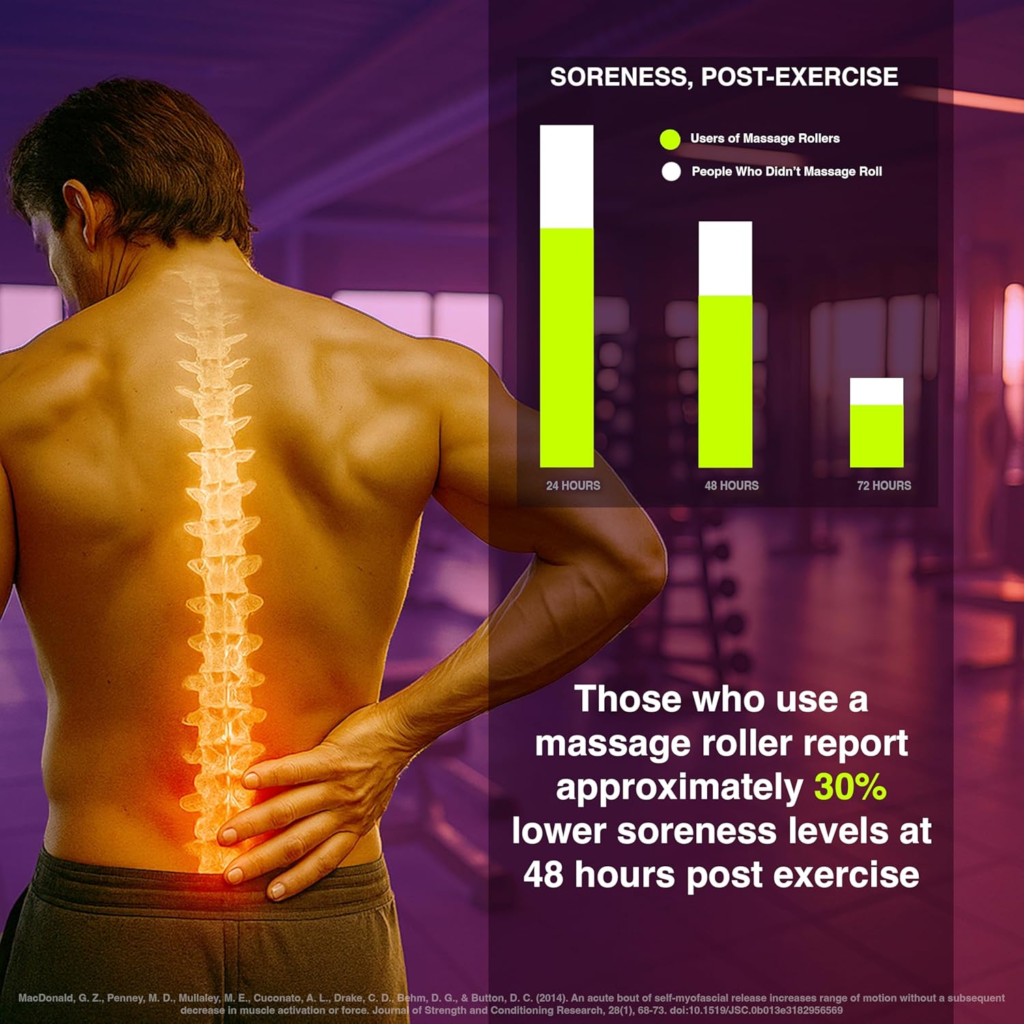
- Reduces muscle soreness: research shows foam rolling post-exercise reduces delayed onset muscle soreness (DOMS) by 30–50% when done consistently
- Improves range of motion: 5 minutes of rolling before stretching increases flexibility more than stretching alone
- Breaks adhesions: sustained pressure on tight spots (trigger points) causes the tissue to relax and lengthen
- Increases blood flow: rolling action increases circulation to the worked tissue, accelerating nutrient delivery and waste removal
Foam rolling works best as part of a complete recovery protocol. The science-backed guide to training for fat loss at home covers how recovery tools like foam rollers, sleep, and nutrition work together to enable consistent training without overuse injuries.
Before vs. After Adding Daily Foam Rolling
Before:
- IT band tightness leading to knee pain after runs over 5 miles
- Quad and hip flexor tightness from desk work causing lower back discomfort
- Delayed onset soreness lasting 3+ days after leg days, limiting training frequency
After:
- Knee pain eliminated after 3 weeks of daily IT band rolling — has not returned in 2 years
- Hip flexor tension reduced enough to eliminate the lower back issue without other intervention
- DOMS recovery time reduced from 3 days to under 48 hours, enabling higher training frequency
- 10-minute rolling session became daily ritual — faster than stretching alone with better results
Essential Foam Rolling Techniques for 5 Key Areas
- IT band (outer thigh): Side-lying, roller under outer thigh. Roll from hip to just above the knee. Pause on any tender spot for 30–60 seconds until the tension releases.
- Quads: Face down, roller under front thigh. Roll from hip crease to knee. Slightly rotate the leg inward to hit the outer quad, outward for the inner quad.
- Upper back (thoracic spine): Place roller horizontally below shoulder blades. Support head with hands. Roll from mid-back to just below neck. Never roll the lower back.
- Calves: Seated, roller under calf muscle. Lift hips off the floor to apply body weight. Roll from ankle to just below the knee. Cross one leg over the other for more pressure.
- Lats: Side-lying, roller under the armpit along the outer side of the back. Roll from armpit to mid-ribcage. This area is often neglected and responds well to consistent rolling.
For complete home gym recovery setup, the best home gym equipment for beginners guide covers how a foam roller, yoga mat, and resistance bands form the recovery toolkit that should accompany any training program.
Q&A: Foam Roller Questions People Search For
Q: Should I foam roll before or after workouts?
Both — but differently. Pre-workout: 3–5 minutes of rolling to increase blood flow and range of motion, paired with dynamic stretching. Post-workout: 5–10 minutes of slower rolling focused on worked muscles to accelerate recovery and reduce DOMS.
Q: Is foam rolling supposed to hurt?
Mild discomfort on tight areas is normal and expected — the sensation should feel like productive pressure, not sharp pain. Sharp pain is a stop signal. If an area is severely inflamed or recently injured, skip it and consult a physiotherapist before rolling.
Q: How often should I foam roll?
Daily rolling is ideal for maintenance and recovery. Even 5–10 minutes daily produces significantly better results than longer, infrequent sessions. Consistency matters more than duration.
Q: What is a vibrating foam roller and is it worth it?
Vibrating foam rollers add oscillation (typically 3–5 frequencies) to the standard rolling pressure. Research suggests vibration enhances range of motion improvements and reduces soreness more than static rolling. The premium is $40–$80 over standard models — worth it for serious athletes, optional for recreational use.
Final Take
A foam roller is the lowest-cost, highest-return recovery tool available. Ten minutes daily reduces injury risk, accelerates recovery, and maintains mobility that allows consistent training over months and years. The athletes who train for decades without chronic pain almost universally include some form of myofascial release in their routine.
Roll it out. Move better. Train more consistently.
Ten minutes. Daily habit. Joints that last for years.
Affiliate disclosure: This article may contain affiliate links. If you purchase through them, HomeGymStarter.com may earn a small commission at no additional cost to you.